Gloucestershire Dyslexia Association

AGM has now been held and we are happy to announce that all trustees and committee members are staying on!
One more committee member has been acquired too, that is good news. If you are able to help with ideas and fundraising don’t hesitate to contact us. There is always room for more people. 
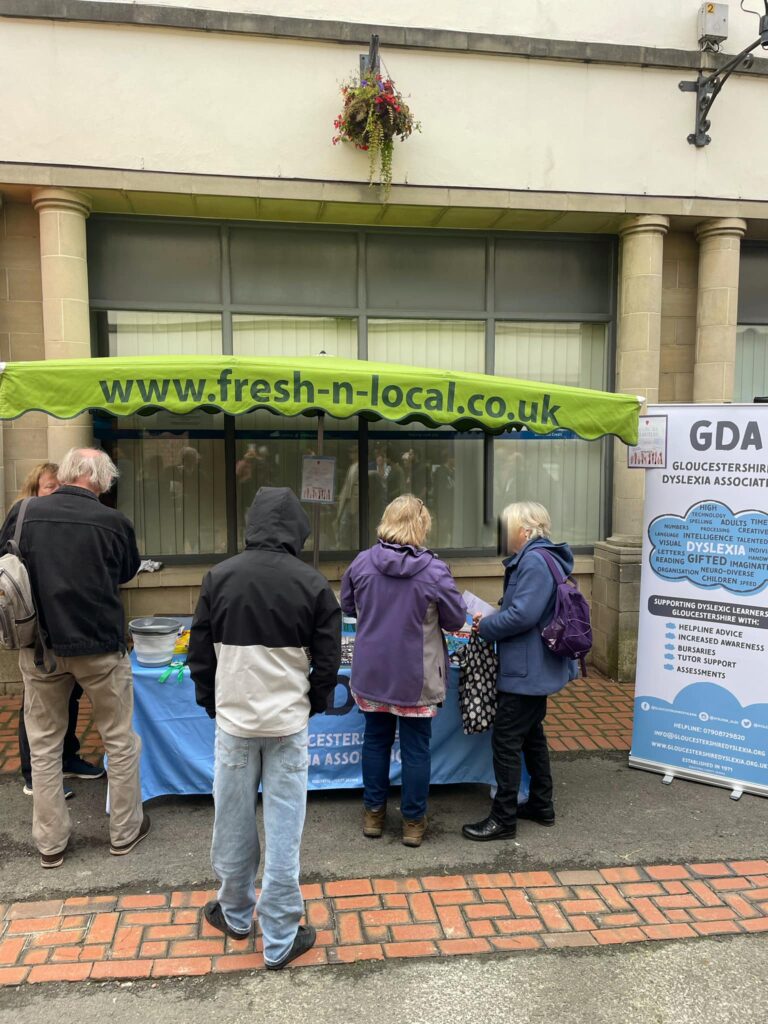
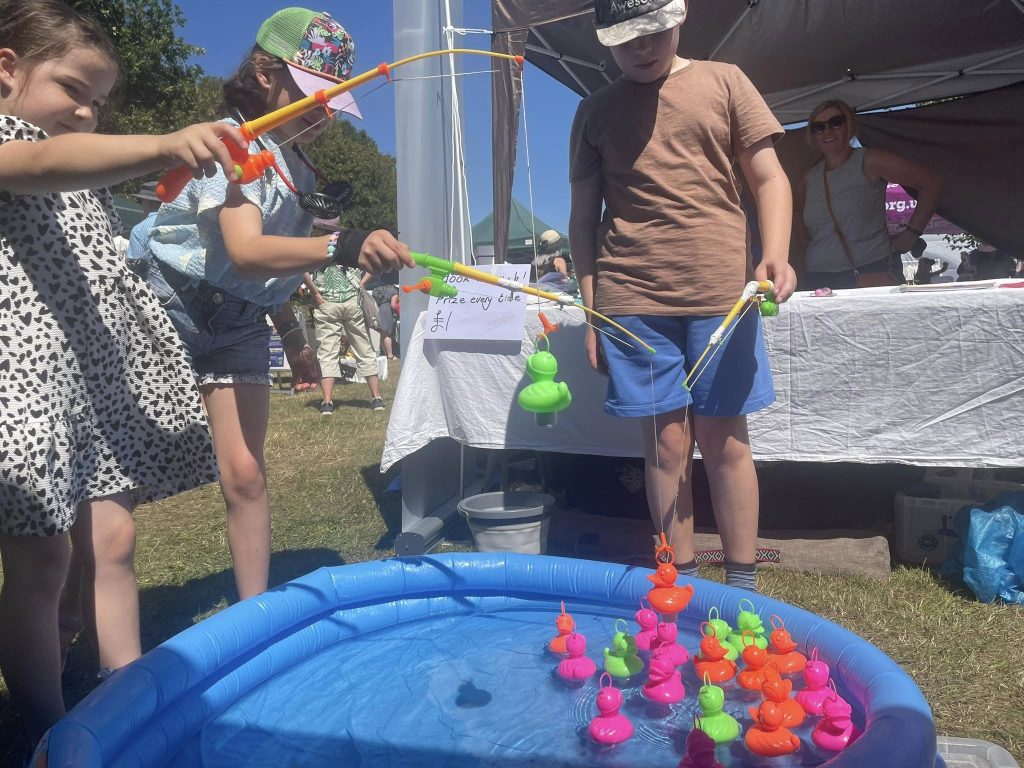
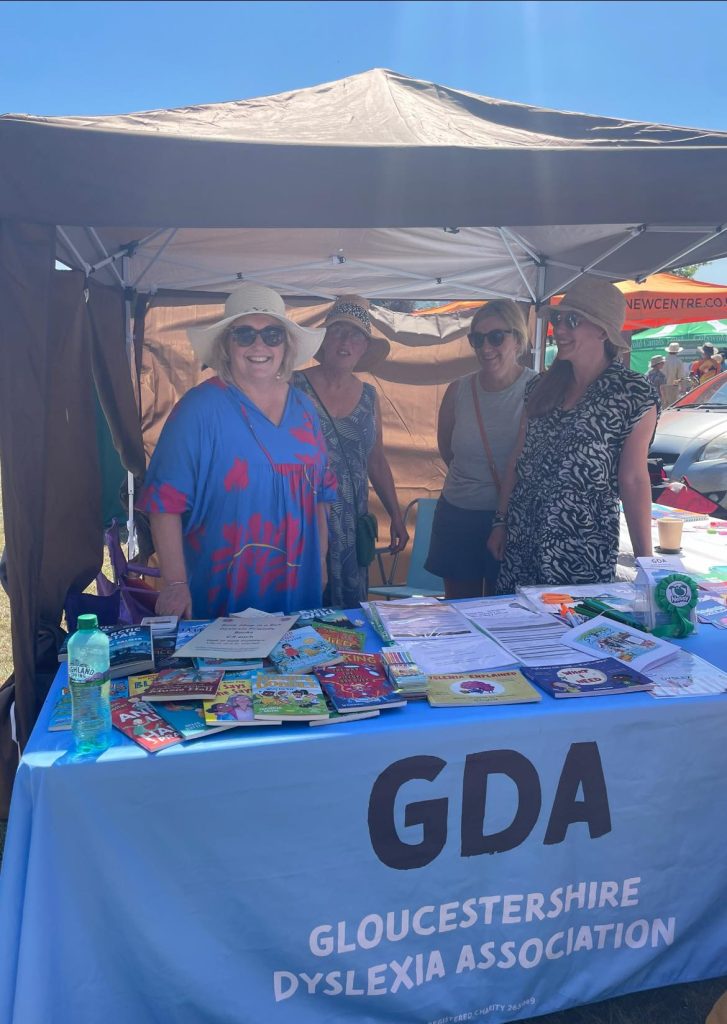
Lovely day at the Stroud Country Fair this summer.
Lots of good chats with people about dyslexia – and kids also loved the hook a duck.
Plus keen interest in our raffles – prizes include tickets for Chalfest – and a voucher for The Beefy Boys!
We are so grateful for their donations!

Gloucestershire parent carer forum SEND fair

We had a great time at the Gloucestershire Parent Carer Forum SEND Fair , with Kate Morris Tutoring .
Thank you to #gloucestershireparentcarerforum for having us!
It was good to be able to talk to many parents and carers and professionals today. It was good to give information and advice about dyslexia.
Thank you to everyone who stopped by our stand – it was interesting hearing your experience and answering your questions.
Visit our website https://glosdys.ultrasimplified.com/, or become a member or come to future events, or become a volunteer you are very welcome 🤝to join.

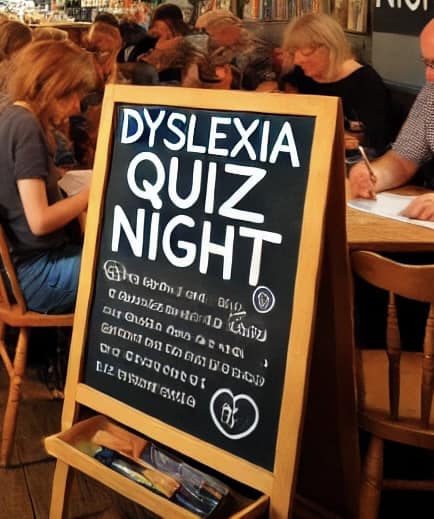
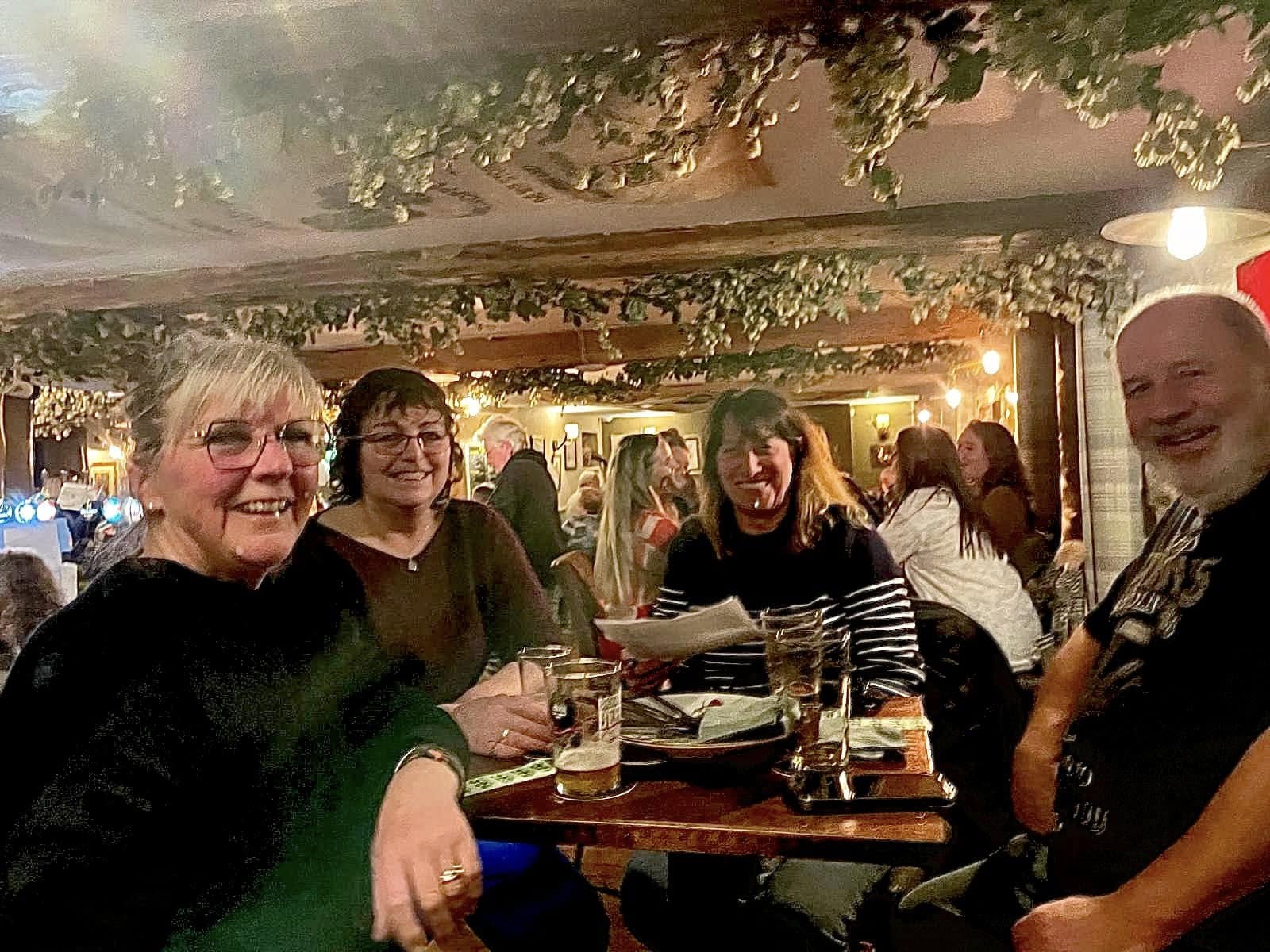
Quiz night at the Old Fox at Coaley

A huge thank you to @oldfoxcoaley for hosting such a fantastic quiz night in support of the Gloucestershire Dyslexia Association! 🌟
We included a dedicated Dyslexia Awareness Round, which not only spread awareness but also gave quiz-goers an opportunity to learn more about dyslexia. It was a wonderful way to combine fun with education!
All our members are passionate volunteers who work tirelessly to support dyslexia, so it was brilliant to come together for an evening of laughter, learning, and fundraising 💕
Thanks to the incredible generosity of local businesses
@frocesterfayre
@cheltenhamraces @knead_bakery_patisserie @hawkinsgroundcare
@the.lazy.goose
to name just a few
We raised an amazing £552 from the raffle 🤩
The Old Fox was the perfect venue for such a memorable night and we’re so grateful to everyone who came along, donated, and supported this important cause.
Here’s to spreading awareness and making a difference together! 💙
 

Stroud Farmers market

🎉 A massive thank you to Stroud Farmers’ Market for kindly hosting us yesterday & to everyone who bought a raffle ticket – your support means the world 🙏 Congratulations to our winners who have now been notified. Because of you, we raised vital funds for dyslexia assessments, increased awareness & had the privilege of speaking with some truly inspirational dyslexic individuals💙
Huge gratitude also to @officialgloucesterrugby @thebeefyboys @glosjobs.co.uk @glos.info & @starbuckscheltenham for donating such fantastic raffle prizes.
Together, we’re making a real difference in the dyslexic community🌟

NEWS AT BATH SPA UNIVERSITY

BSU lecturer explores creative thinking and support for people with dyslexia

Thursday, 11 April, 2024

According to the British Dyslexia Association (BDA), around 10% of the British population is dyslexic. Senior Lecturer in SpLD/Dyslexia and Inclusion, Dr Georgia Niolaki, is increasing awareness and helping create systems to better support people with dyslexia through her research and outreach initiatives. 

Supporting dyslexic learners 

Georgia, along with colleagues from the Gloucestershire Dyslexia Association (GDA) and Birmingham City University, is working on a knowledge exchange project with schools in the region to increase dyslexia awareness and help create bespoke support plans for learners with dyslexia. 

Talking about how the project came about, Georgia said:  

“I was aware at the time of the Arts and Humanities Research Council (AHRC) Impact Accelerator award. This sparked the idea to approach [GDA Chair of Trustees] Clair Penketh and my colleague from Birmingham City University, Dr Aris Terzopoulos. We were all very excited about the project as there is research evidence that to support students with dyslexia, teachers need a sound knowledge of it first.” 

With advice and feedback from the GDA, the group developed and delivered a series of workshops in six schools around the region. They also created a pre-workshop survey to capture the specific areas and topics the teachers wanted to receive training on. 

“In that way, the support workshops and the knowledge exchange initiative would be meaningful and tailored to their needs and the needs of the local schools,” Georgia said. 

To further support learners and the local community, the project received an HEQR seed funding grant to create bespoke interventions to support reading, spelling, writing and coping strategies, and target the need for teaching and managing dyslexia. Importantly, they are tailored to the specific needs and strengths of each learner. 

The group will present evidence for the effectiveness of the intervention at the British Dyslexia Association International Conference later this year. 

Dyslexia and the creative sector 

Georgia was also recently invited by BBC Bristol to talk about dyslexia in the creative sector. The panel discussion was recorded and is being shared with other BBC branches in the UK as part of their inclusion agenda. 

During the discussion, Georgia explained how dyslexia isn’t just one thing; it affects people in different ways, and while people with dyslexia may face a lot of challenges – particularly within a learning environment – they also bring their own unique strengths: 

“Whenever I do an assessment of an individual who has dyslexia, I always start with their strengths. So it might be visual memory, it might be reasoning, it might be verbal abilities, or they may be an amazing communicator.”

There’s also evidence to suggest that dyslexic people make up a large proportion of people in the creative sector. Reflecting on this, Georgia said: 

“There was an amazing study about art students, and there was a huge proportion of dyslexic learners in the representation of artistic subjects that were explored in this particular study. We need more research, but definitely there is evidence that individuals who have dyslexia are drawn towards the creative industries.”

Georgia’s work ultimately strives to raise awareness around the challenges that dyslexic people face and how to better accommodate them, but perhaps more importantly, it’s about recognising each person’s strengths and creating an environment in which they can thrive. 

Georgia said: 

“If someone says that dyslexia is a disability, then basically that’s society putting up barriers for and disabling the individual. It’s not a disability. Dyslexic people have amazing strengths and amazing abilities, if we allow them to express themselves in the best ways that they can.” 

Collaboration with Bath SpA

In December 2022 we supported Dr. Georgia Niolaki and Dr. Aris Terzopoulos of Bath SPA university and kicked off a project to raise awareness of Dyslexia in primary and secondary schools. We undertook four workshops with a variety of schools within the Gloucestershire community.

This has now been followed up with another exciting opportunity to build on the work we did earlier in the year and undertake a new Dyslexia Intervention Pilot in two other Gloucestershire schools in conjunction with Bath Spa University.

Dyslexia Intervention Pilot

Georgia Niolaki and Aris Terzopoulos are sharing their passion and expertise in supporting dyslexic learners by trialling a bespoke intervention that aims to improve not only literacy skills, but the individual’s confidence and self-esteem.

We are fortunate to be working with two schools – St Mark’s Primary School in Cheltenham and Rednock Secondary School in Dursley. Preparations are underway for the intervention to start in early November. Each school is looking forward to their training, and to start developing their own knowledge and skills, in addition to those of their students. The pilot will culminate with Georgia sharing the results at the British Dyslexia Conference in June 2024, with the aim of extending the reach of the intervention to support more dyslexic students and schools. Watch this space for updates on their progress!

Stroud market

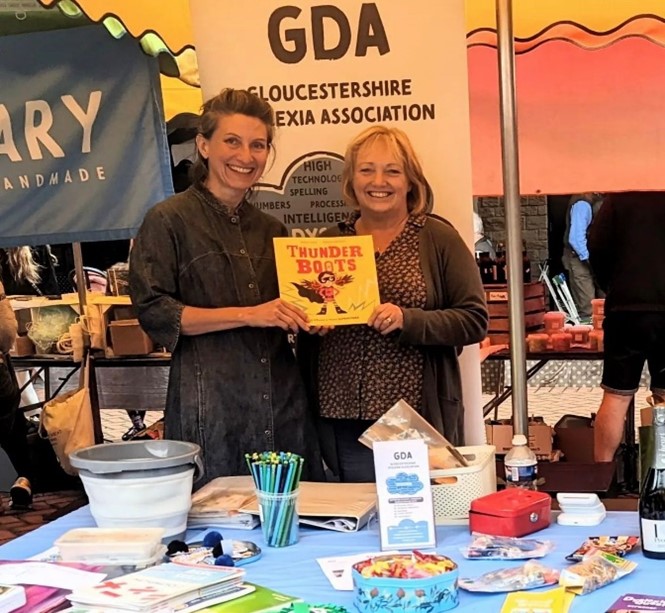
As you will know, October was Dyslexia Awareness Month and at GDA we kicked this off a day early with a stall at Stroud Market on 30th September.

We met a lot of people and had good chats about dyslexia, gave advice and heard success stories. 

We especially loved meeting Rebecca Ashdown illustrator of Thunderboots, the children’s book which celebrates the positives of thinking differently. Written by Naomi Jones.

Esteemed Academics secure funding in partnership with Gloucestershire Dyslexia Association
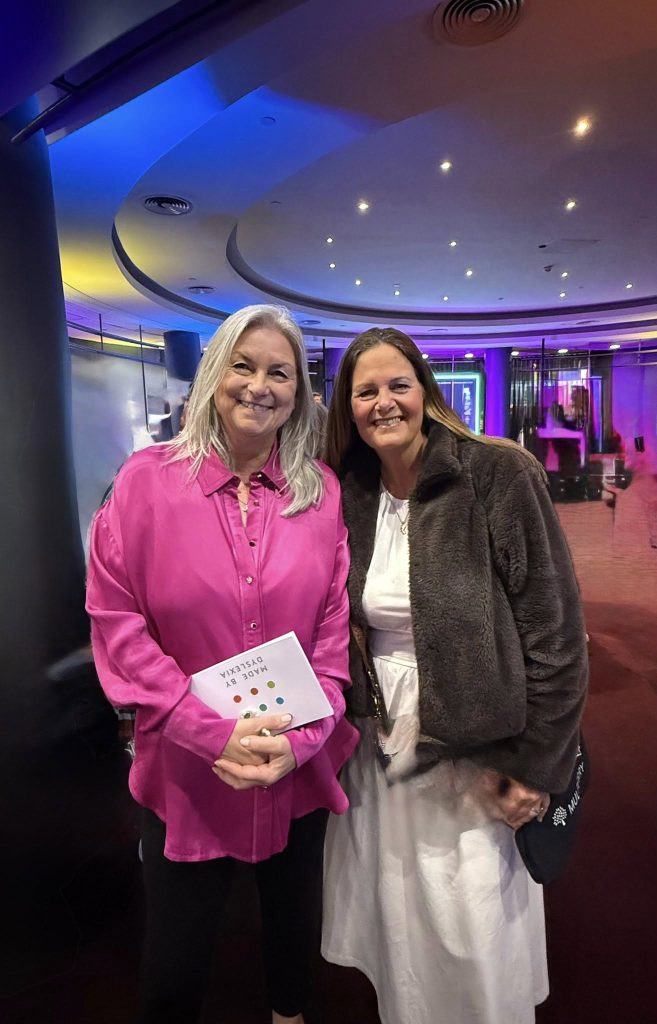
Dr Georgia Niolaki & Dr Aris Terzopoulos are collaborating with the Gloucestershire Dyslexia Association to offer local school teachers the opportunity to sign up for free workshops which will help them learn about and understand dyslexia.
The practical workshops will include:

  • An introduction to different educational needs, neurodiversity and inclusion
  • Theoretical, evidence based and practical solutions with regards to dyslexia and co-occurring difficulties
  • Q  & A – working with children, best approaches, teaching practices and ideas for support.

Georgia, a specialist dyslexia advisor, assessor and Senior Lecturer at Bath Spa University and Aris, a Psychologist in the area of language development, Educational Practitioner and Lecturer in Psychology at Birmingham City University alongside the GDA will be presenting the free workshops.

Chairwoman of the Gloucestershire Dyslexia Association, Claire Penketh said;  “it’s a fabulous opportunity for schools to learn from these high level academics and we look forward to working with them on the project as we continue to raise dyslexia awareness in schools“

The workshops are supported by a Knowledge Exchange grant from Bath Spa University and we can’t wait to get started.

Dyslexia and Me writing competition winners announced

The three winners of the Gloucestershire Dyslexia Association writing competition have been announced. They were given their prizes by Stroud children’s author and poet, John Dougherty at a special ceremony in Stroud Library. As well as reading out the winning entries, John also entertained the audience with readings from his own books, including Dinosaur Dinner Ladies.
The winner of the junior category was by eight-year-old Lowri. In her poem along the theme of Dyslexia and Me, she wrote: “I feel as if white snakes are moving along the page when I read. I really like animals, and I am very good at knitting.

When I had just turned eight, I went to the optician. The man said that I might have dyslexia. I always feel sad because I find it hard to read.

My brother learnt to read when he was seven. I feel it is not fair. I sometimes feel I am the odd one out. I am good at lots of things, like handwork and playing musical instruments. My uncle has dyslexia. My granny used to get cross with him because he could not read. I think that was mean, but she did not know that he had dyslexia.

I am slowly getting better at reading. My mummy has helped me. Sonja, the class one teacher, used to do reading with us. She gave me lots of time. That helped. I hope I can read soon.”

The secondary school age competition winner was eleven-year-old William Tull from Dursley. He titled his short poem – Stop talking! It describes the difficulty that people with dyslexia sometimes have when reading aloud and being frustrated because of the reaction of others. He wrote: “Why are you talking? Sssh! Why are you talking out loud? Sssh! Stop thinking out loud? Sssh! I just want you to be quiet! Sssh! I can’t do my work! Sssh! You’re stopping me from doing my work! Sssh! I just want to go to lunch!” For this one, John did a ‘call and response’, so everyone had to do a Sssh after every line.

There was a special category for overall winner, 16-year-old Jasmine Fishwick, also from Dursley.

She wrote: “Many won’t understand what it’s like for a dyslexic brain: Being in a hall everything swirling around the letters jumping about the page everything merging into one but it’s okay because as long as I learn to spell like vulnerable and unpredictable it will all be okay, yet they don’t know how hard that is in a dyslexic brain.

“Because before we even step into the exam, we are at a disadvantage. All the spelling bees causing sweat and tears because it is always a lot harder for a mind like mine; many say it can be a superpower which I think is true we see the world differently however our superpower gets turned into an enemy the school system holds no-fault because as long as you can pass the English paper and pass the spelling bee then nothing else matters…

“I wouldn’t change being dyslexic it has taught me so much, but I really wish I can turn and say, ‘live in a dyslexic brain for a day’.”

The mother of Lowri, said: “It was a really lovely event. I found the children’s work so touching. Lowri enjoyed it a lot and it was very comforting for her to know that she is not alone, and it is going to be okay.