Gloucestershire Dyslexia Association


Wendy Hawkins
Contact details:
Based in Stroud
Tutoring and assessing primary and secondary children.
I am a primary trained teacher with 30 years of teaching experience. For 15 of those years I was a primary SENCo (special education needs coordinator).
I completed the 2 years of my post-graduate training for dyslexia in 2007 and hold the relevant qualifications for both teaching and assessing dyslexic individuals.
I am now a part-time Support Teacher at a local secondary school, alongside private tutoring and assessing. I am a volunteer trustee for Gloucestershire Dyslexia Association. The students I teach privately range from 8 to 15 years. I am also trained as a Forest School Leader, but sadly have not had the opportunity to work within this field for a long time but try to bring the ethos into my dyslexia work.

Dr Georgia Niolaki Accredited Member of the British Dyslexia Association (AMBDA)
Contact details:
Assessment for children and adults.
I am an Assistant Professor in Neurodiversity at the University of Birmingham, teaching at the Department of Disability, Inclusion and Special Needs (PG Certificate Dyslexia and Literacy Difficulties). I have worked as a primary teacher for fourteen years before training to become a specialist dyslexia assessor. I have an MA in Literacy Learning and Literacy Difficulties from UCL and a PhD in Cognitive Psychology and Psycholinguistics. I hold a BDA accreditation and professional membership and I am a trustee of the British Dyslexia Association. I hold an Assessment Practising Certificate. I offer full diagnostic assessment and report following the SASC criteria and recommend access arrangements tailored to the needs of the learner. I assess children, young people and adults.

Dr Elsa Suckle
Contact details:
website: neurodiversityspace.com
I am a specialist dyslexia, autism, and ADHD practitioner and specialist assessor for dyslexia and ADHD. I am passionate about putting the right support in place for neurodivergent students and guiding people to better understand how they work best and how to capitalise on that. I have a Level 7 qualification in Language, Literacy and Dyslexia from the University of Birmingham and I am an associate member of the BDA, a professional member of Patoss, and hold a current APC.
I currently offer dyslexia diagnostic assessments for the age group 12-24 which focus on educational recommendations. I also have substantial experience working with apprenticeship learners. I can offer SpLD assessments for ADHD for educational purposes to put Disabled Students Allowance in place in line with SASC guidelines. This applies to the age group 17-24.
It can be daunting seeking a diagnosis, so please feel free to reach out to me for further information and a friendly chat.

Bernadette Lee
Contact details:
email: bernielouiselee@gmail.com
I carry out diagnostic assessments for learners 8 to 16
Full diagnostic assessments
Tuition
Qualifications: BA Hons
PGCE
Hornsby Diploma
SpLD APC (Patoss)
I have worked for many years in a local prep school and live in Leckhampton. I have always had a special interest in dyslexia. I have taught many children who have presented with learning difficulties. Having specialized in literacy teaching for many years, I have much practical experience in the ways learning difficulties impact on a child’s progress and how to help.

Carol Heath-Smith
Specialist Assessor and Coach
Contact details:
website: discoveringthepowerofyou.org
email: carolheathsmith@gmail.com
mobile: 07395 017206
Age range: Primary to 14
Service Provision:
Tuition
Full diagnostic assessments
Qualifications:
MA in SEND
B. Ed (1st class hons) with QTS
Certificate for Teachers for Learners with Specific Learning Difficulties
Certificate of Psychometric Testing, Assessment & Access Arrangements (CPT3A)
Six Seconds UEQ – Unlocking EQ (23)
EQ Assessor Certification 2023 (EQAC)
Brain Profiler Certification (BPC)
I am a qualified specialist teacher assessor holding an approved qualification including a current Specific Learning Difficulties (SpLD) Assessment Practising Certificate (APC- Patoss)
At Discovering the Power of You, our mission is to empower individuals through personalised assessments and coaching in neurodiversity, social and emotional intelligence. We strive to unlock each person’s potential by using data-driven insights to guide their growth, foster success, and create inclusive environments where every unique mind can thrive.

Deborah Cobbing
BA, PGCE, PGC Dyslexia and Literacy, APC SpLD (PATOSS)
SASC Registered
Specialist Dyslexia Assessor and Tutor
Contact details:
website: https://dyslexia-assessment.uk
email: deborah_cobbing@yahoo.co.uk
mobile: 07779 041 151
Facebook: https://www.facebook.com/DeborahCobbing
Expert SpLD Assessments & Specialist Support
With over 20 years in education and 10+ years delivering SpLD assessments, I provide expert assessments for dyslexia, dyspraxia (DCD), and ADHD. As a former class teacher, specialist educator, and SENCo across primary and secondary schools in both state and independent sectors, I bring a wealth of experience to every assessment.
Beyond assessments, I offer tailored tuition, school support, and expert consultancy, including advisory work with the British Dyslexia Association.
My approach focuses on identifying strengths, helping students understand their challenges, and providing practical recommendations for support at school, university, and home.
I empower students and educators to recognise and develop sought-after talents, breaking negative learning cycles and fostering opportunities for success.
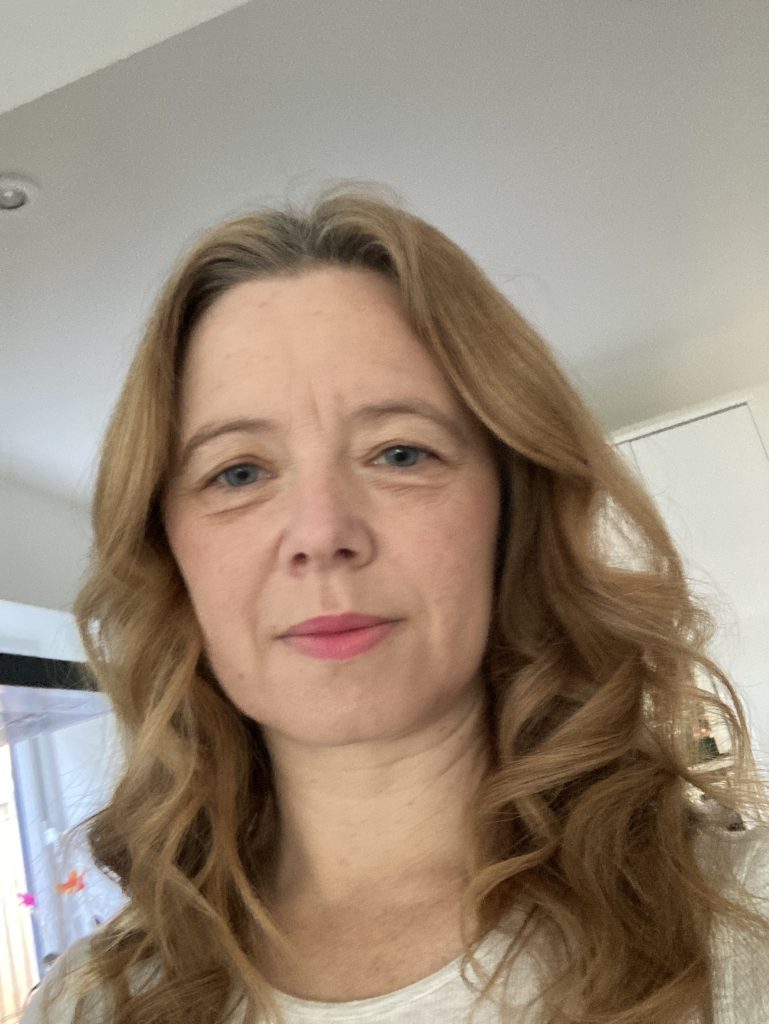
Ruth Paterson
Contact details:
email: info@empoweringlearners.co.uk
Webpage empoweringlearners.co.uk
I am a primary trained teacher and have taught in state and independent schools, working with pupils in all year groups from Reception to Year 13. I am a qualified Specialist Teacher and Assessor for dyslexia, holding a current APC. I am also qualified as a Specialist ASD Mentor and Study Skills Mentor, and support students at university.
After 16 years of school based teaching, including working as Deputy SENCO and Exam Access Arrangements Assessor, I now work as a private tutor, dyslexia diagnostic assessor and school exam access arrangements assessor. My aim is to support students with a range of needs to overcome difficulties and achieve their best.
I offer tuition for pupils up to the age of 14, and full diagnostic assessments between the ages of 8 and 16.
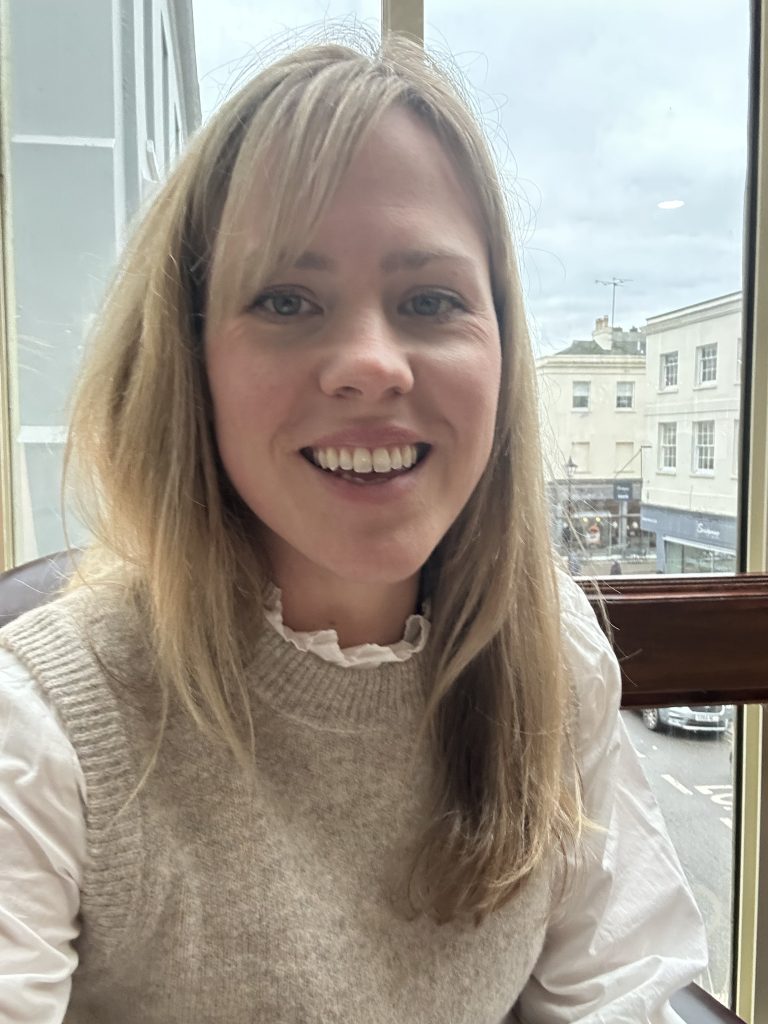
Kayleigh Leese
MA SpLD, BA, PGCE, APC (British Dyslexia Association)
Specialist tutor and Assessor: EYFS, Primary and Secondary
Based in Cirencester
Contact details:
Website: www.kayleighleesetutor.co.uk
email:kayleighleesetutor@gmail.com
As a Level 7 specialist assessor with extensive experience as a SENDCo and specialist teacher, I combine detailed assessment with a compassionate, child-centred approach. Every assessment is conducted at the child’s pace, in a relaxed and supportive environment where they feel comfortable enough to demonstrate their true abilities.
My diagnostic reports provide a detailed picture of each individual’s cognitive strengths, areas of need and learning profile, translating complex assessment findings into clear, practical recommendations for home and school. Families often tell me that they leave the assessment with a greater understanding of their child, renewed confidence and a clear plan for moving forward. My aim is for every child to leave feeling proud of their strengths, and for every parent/carer to leave feeling informed and supported.
WHAT TO EXPECT FROM A DYSLEXIA ASSESSMENT.
The assessment includes investigation into three different areas:
Having carried out assessment in the first two areas, it is possible to determine whether an individual is significantly underachieving in literacy / numeracy, compared with what would be expected when considering their underlying ability. The cognitive tests give an indication of whether any underachievement may be linked to difficulties within these areas of learning. The results are then viewed in relation to the definition of dyslexia (see below) and a conclusion is made as to whether the individual is dyslexic or not.
This testing can take up to 3 hours, depending on the age of the individual and the complexity of their needs. It can be managed in 1 or 2 sessions, with suitable breaks as needed. Parents may wish to stay with the young person but need to be aware that sometimes parents/carers are a distraction, and it can influence the young person’s behaviour or performance. Parents may want to bring something to keep themselves occupied or plan a time to return.
It is important for children to know that they are coming to see someone who is interested in how people learn. The assessment will help to work out why some learning is difficult and what might help to make things easier.
Background information from parents and school is extremely important in building up the individual’s ‘learning profile.’ Any diagnosis involves more than just test scores and must include developmental history. Therefore, both school and parents are asked to complete a questionnaire that is returned to the assessor at least 1 week before the assessment. Tests can then be tailored to the needs of the child. Children can bring examples of schoolwork and reports with them; a current reading book and a short piece of totally independent writing is also useful.
The child must have had a sight test within the last six months. If the child has glasses (prescription and / or tinted) or uses a coloured overly it is vital that they bring them with them to the assessment.
A visual questionnaire is also completed prior to the assessment. If this flags up possible issues, it is advisable to go to a suitably qualified optician for a Specific Reading Difficulties (SRD) assessment. This is different to the usual eye test and not all opticians offer it, but ‘Weygangs’ and some branches of Norville’s do in this area.
THE REPORT The structure of the assessment report is one that is recommended by the professional bodies that regulate qualified assessors of dyslexia – the British Dyslexia Association, BDA and the Professional Association for Teachers Of Students with SpLD, PATOSS. It can be up to 30 pages in length and provides details of the young person’s achievement in the tests, a learning profile that indicates whether dyslexia has been diagnosed or not, and recommendations for the future, including ‘signposting’ to other professionals if required.
Legislation was passed in 2019, meaning that the report can last the educational lifetime of the individual concerned and no further full assessment will be needed, for example, when they progress onto further education. However, the assessor must have an up-to-date Assessment Practising Certificate (APC) from either the BDA or PATOSS for the report to be recognised for this purpose. This is renewed every 3 years.
COSTS. Assessment & full report includes time to talk through report with parents as needed.
The Delphi Definition of Dyslexia (2025)
Nature • The nature and developmental trajectory of dyslexia depends on multiple genetic and environmental influences. Manifestation • Dyslexia is a set of processing difficulties that affect the acquisition of reading and spelling. The most commonly observed cognitive impairment in dyslexia is a difficulty in phonological processing (i.e. in phonological awareness, phonological processing speed or phonological memory). However, phonological difficulties do not fully explain the variability that is observed. Working memory, processing speed and orthographic skills can contribute to the impact of dyslexia. Impact • In dyslexia, some or all aspects of literacy attainment are weak in relation to age, standard teaching and instruction, and level of other attainments. Across languages and age groups, difficulties in reading and spelling fluency are a key marker of dyslexia. Variance and co-occurrence • Dyslexic difficulties exist on a continuum and can be experienced to various degrees of severity. Dyslexia can affect the acquisition of other skills, such as mathematics, reading comprehension or learning another language. Dyslexia frequently co-occurs with one or more other developmental difficulties, including developmental language disorder, dyscalculia, ADHD, and developmental coordination disorder.
Holden, C., Kirby, P., Snowling, M.J., Thompson, P. A., Carroll (2025) Towards a Consensus for Dyslexia Practice: Findings of a Delphi Study on Assessment and Identification, Dyslexia, 31(1), https://doi.org/10.1002/dys.1800
|